Secret Societies

Cat Velis, Mireille de Rémy, Alexandra Solarin-these and other characters in The Eight and The Fire–are swept up in the quest for the Montglane Service, the chess set that once belonged to Charlemagne, and we are swept up, along with them. As together we begin to uncover its hidden past, we discover that it may be connected to several mysterious groups possessing esoteric, mystic and/or scientific knowledge going back to ancient times. That knowledge, as we will learn, has been encoded into the pieces and board of the legendary chess set that was originally designed and built in 775 A.D., in Baghdad.

Although Katherine Neville herself invented the mystical chess set which first appears in her novel, The Eight, the “inventor” to whom she attributes its creation, in her imaginative work, was actually a very real, almost monumental, historic figure: the medieval Sufi scientist and Father of Islamic Alchemy, al-Jabir ibn-Hayyan. Indeed, it was Al-Jabir’s extensive writings–many of which are still in print today–that would later inspire, among many others, the subsequent research of that great 14th-century alchemist, Nicolas Flamel (of more recently fictionalized “Harry Potter” fame.)

In The Eight, we find the empress, Catherine the Great of Russia, telling her childhood friend–Helene de Roque, now abbess of Montglane Abbey in the French Pyrenees–the story of how, when Catherine was young, the great mathematician Leonhard Euler had warned her about a secret society of men known as the Brotherhood of Freemasons, who “knew the mysteries of the ancients.” These men, Euler had explained to young Catherine, were the spiritual descendants of the men whose forbidden knowledge al-Jabir had encoded into the Montglane Service. Catherine now seeks the Service and the knowledge it contains in order, she says, to prevent the Freemasons from invoking the powers of the chess set to topple monarchies into the dust and seize control of the world. But the abbess envisions another alternative: “Perhaps their aim is to free the world,” she suggests to the empress.

Then, in The Fire, an allusion to another secret society surfaces, when Alexandra “Xie” Solarin (the daughter of Cat Velis and Russian grandmaster Alexander Solarin from The Eight) first appears as the apprentice of master chef, Rodolfo Boujaron, whose posh Washington, D.C. restaurant is called Sutalde, the Basque word meaning “hearth.” The unusual name of this restaurant actually points us to the secret society which plays a pivotal role in the historic chapters of The Fire: the Carbonari, or Charcoal Burners. “Like the Rosicrucians, Freemasons, the Illuminati,” Xie’s boss Rodo tells her one night when they are alone at the Hearth, “these Charcoal Burners also say they possess a secret wisdom only known by the initiated, such as themselves.” Rodo traces the origins of the society back to ancient, pre-Roman and Greek mystery religions involving the goddess Hestia . . . and he adds that the Montglane Service is the repository of that ancient wisdom, which he believes is recorded in physical form through this very chess set, created by al-Jabir.


Like characters such as Cat and Alexandra, readers themselves of Katherine Neville’s tales are constantly surprised by discovering such unexpected connections between things that, at first, may seem unconnected–by secret histories that reveal people and events in a startling new light, and that turn what we think we know upside down and inside out, until we feel as if we are trembling on the verge of a revelation that will put all those shattered pieces back together into a new pattern that will suddenly make sense of everything . . . a new pattern which is also an old pattern, which may, indeed, be the oldest pattern of all. Gradually, as we read on, it dawns upon us that the secret societies Katherine Neville has carefully introduced into her plot are themselves reflections, or refractions, of a society so secret that it doesn’t even have a name: a most secret society consisting of the players of the great Game that is both symbolized by and resident in the thousand-year-old chess set she created.


It is clear in exploring all of her writings that Katherine Neville has a deep interest in, and has also collected a vast repertoire of knowledge about, certain societies which have themselves been a repository of wisdom from the ancient mystery schools. For instance, in Neville’s story, The Tuesday Club (in the anthology Thriller, 2006)–which takes place on the day and year that Ben Franklin, Thomas Jefferson, and John Adams first met in Paris to turn over the French mission–we learn of some startling connections among early Scottish Freemasonry, ancient Egyptian architecture, and certain mysteries involving musical tones.


Intriguing, yes. However, what exactly constitutes a secret society is a matter of some controversy. Political groups like the Carbonari and certain religious groups, like branches of the Sufis or Shi’a, have had to maintain close secrecy–sometimes, if only for reasons of the personal safety of their members’ lives. While others, like the Freemasons, have historically made little secret of their rites and rituals, their political goals, or their membership rolls–indeed, the Masons take pride in boasting of famous members like George Washington, Benjamin Franklin, and Voltaire. But though their rituals may have been in print for more than 100 years, the meaning behind such rites remains closely guarded among the initiates, who relish the idea that theirs is an ancient wisdom whose underlying meaning can still be protected by secret code words, handshakes, and visual images.


So in real life, how can we define these secret societies that have cropped up repeatedly throughout history, and where have they come from? Are they political organizations or religious entities? Are they terrorist groups like al-Qaeda or occult outfits like the Hermetic Order of the Golden Dawn or college fraternities like Yale’s Skull and Bones society? The answer may be: All of the above.


However, a broad definition is possible. A secret society is a group of like-minded people who share a common objective or belief system, who may strive to keep the fact of their existence secret from the rest of the world (or at least, to cloak the true nature of that existence behind an impenetrable or misleading façade), who may keep their membership hidden (sometimes even from other members), and who claim to possess arcane or esoteric wisdom that is often explicitly linked to an ancient wisdom which has been preserved and communicated over the centuries, or even millennia, through a body of ritual that is generally hierarchical and progressive, with more of the “truth” revealed to initiates the higher they rise in the organization.


Secret societies have been documented since the beginning of recorded history, and likely existed long before. They began as religious organizations, though we must recall that the separation of religion from the secular state is a relatively recent innovation, and even today is by no means the norm throughout most of the world. But in the ancient world there was no distinction whatever. Beginning as early as the world as it is revealed in prehistoric cave paintings, to the Egyptian cult of Isis and Osiris, to the Greek Eleusinian mysteries, to early Christianity itself, the world has been steeped in religious sensibility and belief in the supernatural, with corresponding rites whose secret meaning was closely maintained through a network of initiates and priests. This system of ritual, revelation, and initiation into “the mysteries” provided the fabric, the very lifeblood, of the social order in early societies.

Such secret Orders, and their corresponding rites, were preserved and maintained despite forced migrations, including slavery, or attempts by governments and rival cults alike to eradicate them. As late as the medieval era and beyond, social groups claiming to hold secret wisdom– such as the Gnostics, the Cathars or the Knights Templar, sought to establish their pedigree by linking themselves explicitly to the deep wisdom held by the ancient mystery religions; and scholars have demonstrated, in fact, that such linkages do exist.

Fast forward to modern times. With the Enlightenment, a more secular, scientific, and overtly political outlook permeated Western society, and these elements were reflected in the secret societies that arose at the time, such as the Freemasons and the Carbonari. The political clout of these and other secret societies in modern times has given rise to popular paranoid fantasies in which various historical events are explained by conspiracies orchestrated by invisible puppet masters.

Let’s take a closer look at some of these secret societies.

(In each section below, Katherine Neville has provided us a reading list of books that may be of interest to those who wish to pursue these topics in greater depth–or who just wish to have fun reading!)

Knights Templar

One of the oldest and most influential of Western Secret Societies was the medieval military/religious order, The Poor Fellow-Soldiers of Christ and of the Temple of Solomon, known by their familiar name as the Knights Templar. Founded around 1119 by two veterans of the First Crusade in newly conquered Jerusalem, the order was situated on the Temple Mount, believed to be the ruins of the Biblical Temple of Solomon.

Beginning with only nine members, within fifty years the Knights Templar had become a wealthy charitable order as well as a potent and feared fighting force, with thousands of members and property spread across Europe and the Middle East. But when the military successes of the early Crusades began to ebb, the fortunes of the Knights Templar ebbed too. Forced out of the Holy Land by the Islamic reconquest, the Knights returned to Europe, where their wealth and privileges increasingly brought them into conflict with the nobility, church, and other representatives of the established feudal order.

In 1307, King Philip IV of France, “Philip the Fair,” arrested the leaders of the Knights Templar on trumped-up charges of heresy, and in 1312, after a protracted political struggle, Pope Clement V officially disbanded the Order. In 1314, the last Grandmaster of the Knights Templar, Jacques de Molay, was burned at the stake in Paris.

Although Katherine Neville herself does not treat of the Knights Templar in her own writings, the Templar trials and their sudden disappearance from the public scene, nearly 600 years ago, has spawned, over the years, a veritable cottage industry of fiction and non-fiction alike, making them (with apologies to Gilbert & Sullivan) “The very model of a modern Secret Society.” Myths and legends about the Templars persisted down the years and centuries. Many people believed, for example, that the Knights Templar had discovered artifacts such as the Holy Grail in Jerusalem and had kept them in their possession, and that although the Order had been officially disbanded, it still existed in some form, underground, and possessed more power than ever.

This speculation has recently been whipped to an even further frenzy by the recent release, from the Vatican Archive, of the trial documents, which indicate not only that Jacques de Molay and the Knights were innocent, but that Church and State had colluded in a cover-up. These findings–long suspected by Templar scholars and enthusiasts–have now unleashed a veritable storm of publications revisiting the politics of the day, which is unlikely to quell popular interest.

Later organizations like the Freemasons adopted structural elements from the Knights Templar and sought to present themselves as the heirs of its traditions, as well as of an esoteric knowledge stretching back to the time of Christ and even earlier, to ancient Egypt at the time of the Pyramid Builders.

Katherine’s “Knights Templar” reading list:

(Note: The demise of the Cathars is linked to the destruction of the Knights Templar, therefore a Cathar reading list will be added to this list at a later date.)

-The Knights Templar-Stephen Howarth

-The Rule of the Templars-J.M. Upton-Ward

-Sacred Sites of the Knights Templars-John K Young

-The Knights of the Order-Ernle Bradford

-The Knights Templar and Their Myth-Peter Partner

-The History of the Knights Templar-Charles G. Addison

-Addison’s Knights Templars-Robert McCoy

(These prior two cover the myth of the Knights in England and Scotland, the Holy Grail and Spear of Longinus)

-The Knight in History-Francis Gies

-The Trial of the Templars-Malcolm Barber

-The Templar Treasure at Gisors-Jean Markale

-Guia de la Espana Templaria-Juan G. Atienza (A pocket travel guide to Templar sites in Spain, with maps and pictures)

-The Knights Templar in the New World-William F. Mann (Story of Sir Henry Sinclair and the Grail in Acadia)

NEWS FLASH:

-The Templars-Barbara Frale (A PhD from University of Venice, Frale is an expert on the Crusades and a staff historian at the Vatican Secret Archive. She discovered the Chinon Parchment absolving the Templars. The forward to her book is by Umberto Eco.)

Freemasonry

Freemasonry is a fraternal order that arose in Scotland and England in the seventeenth and eighteenth centuries and spread throughout the world. There are a number of different branches of Freemasonry; for instance, the United Grand Lodge of England and its affiliated lodges require prospective members to profess belief in a supreme being, while those lodges associated with Grand Orient de France do not. But for our purposes, two Freemasonries can be distinguished. The first is Freemasonry as it actually exists: a charitable fraternal organization with millions of members worldwide that combines public service with somewhat silly private rituals whose quasi-religious symbolism is meant to encourage personal spiritual and moral growth. The second is the myth of Freemasonry as a powerful, malign secret society-a vast conspiracy involved in everything from JFK’s assassination to 9/11 to the collapse of Wall Street. It is this view of Freemasonry that Catherine the Great expresses. Nor does Helene disagree-she merely feels that the Freemasons may be a benign secret society instead.

Such hyperbolic views are no doubt made easier to hold by the organization’s embrace of esoteric symbolism and allegory, as well as its obsessive secrecy. But while it is true, for example, that many of the leading lights of the American and French revolutions were Masons, this does not mean that the American and French revolutions were orchestrated by Freemasonry as part of the unfolding of some grand design. In the eighteenth century especially, as the principles of the Enlightenment and the Scientific Revolution became more widely embraced among intellectuals and freethinking aristocrats, it is little wonder that an elite organization like the Freemasons would reflect a belief in those principles.

Freemasonry has made its share of powerful enemies over its long history. Perhaps chief among them in terms of sheer persistence is that rival secret society, the Catholic Church, which holds that the organization encourages atheism or, at the very least, a deism incompatible with Catholic doctrine. For this reason, the Church prohibits its members from becoming Freemasons. Allegations of Satanism and other occult practices have also been leveled. In Nazi Germany, Freemasonry was viewed as a revolutionary Zionist group and persecuted accordingly, while in Saddam Hussein’s Iraq, membership was punishable by death.

Katherine’s “Freemasons” reading list:

1. Books by Freemasons and other authorities:

-Morals and Dogma-Albert Pike

-A New Encyclopedia of Freemasonry- A.E. Waite

-Duncan’s Ritual-Malcolm C. Duncan (Guide to the 3 degrees of the York Rite)

-The Lodge of Washington DC-F.L. Brockett (History from the records of Alexandria Lodge No 22, George Washington’s lodge)

-A Dictionary of Freemasonry- Robert McCoy

-Freemasonry and the American Indian-William R. Denslow (Missouri Lodge of Research)

-Freemasonry: Symbols, Secrets, Significance-W. Kirk McNulty (A gorgeous Thames & Hudson coffee-table book)

-Freemasonry in the 13 Colonies-J. Hugo Tatsch

-Facts About George Washington as a Freemason-J. Hugo Tatsch

-The Meaning of Masonry-W.L. Willamshurst

-Hermetic Masonry-Frank C. Higgins

2. Books by Non-Freemasons (Caution: a few with an Agenda, or even an axe to grind):

-The Freemasons: A History of the World’s Most Powerful Secret Society-Jasper Ridley

-Freemasonry and its Ancient Mystic Rites-C. W. Leadbeater (Theosophist and Clairvoyant, friend of Blavatsky)

-The Temple and the Lodge-Michael Baigent and Richard Leigh (By the guys who gave us Holy Blood, Holy Grail)

-The Templar Revelation-Lynn Picknett and Clive Prince (More Blood, Grail, Templars, Masons–and likely the first mention of the Secret Code of Leonardo da Vinci in Chapter One)

-Ark of the Covenant, Holy Grail- Henrietta Bernstein (Ark, Grail, and a summary of the history of Western Path Secret Societies)

-The Secret Architecture of Our Nation’s Capital: The Masons and the Building of Washington DC-David Ovason

(Freemasonic errors galore–but fun to read!)

-The Brotherhood-Stephen Knight (Scandalmongering book by a journalist re: the 1980s actual conspiracy implicating members of the Vatican, the Mafia, Italy’s Banco Ambrosiana, and “Propaganda Due,” a secret (and illegally self-appointed) Freemason lodge. St Peter’s’s Banker by Italian journalist Luigi DiFonzo provides a more accurate analysis of events that are also covered by Francis Coppola in Godfather III.)

-Inside the Brotherhood-Martin Short (Scandalmongering “sequel” by a former TV documentary person.)

EXCELLENT:

-The Art and Architecture of Freemasonry-James Stevens Curl (The author may or may not be a Freemason, but he is a brilliant architectural historian. The bibliography alone is worth gold.)

3. Books by Lomas and Knight:

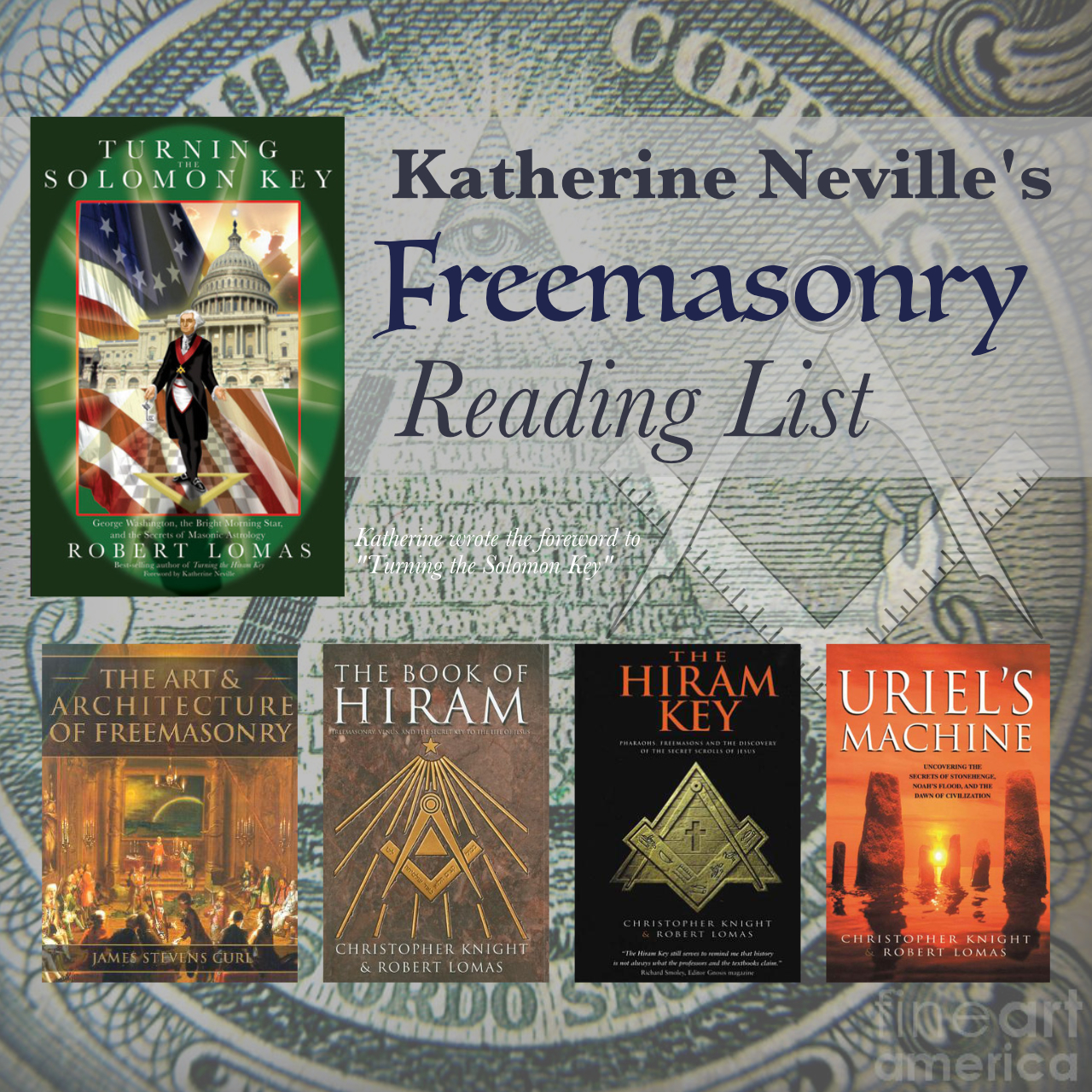
Robert Lomas and Christopher Knight are the top-selling Freemason authors in history, and deserve their own section.

Their books involve a re-thinking of biblical and pre-dynastic Egyptian history as interpreted through Masonic rites.

These include:

-The Book of Hiram

-The Hiram Key

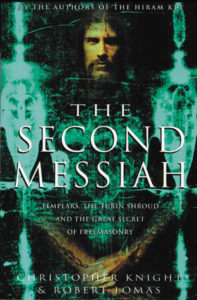
-The Second Messiah

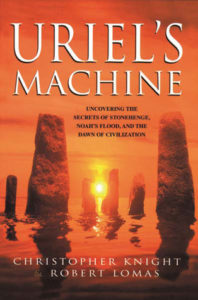
-Uriel’s Machine

A stand-alone book of Robert Lomas’s:

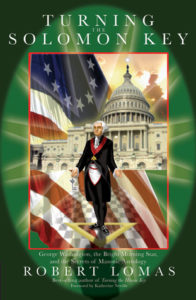
-Turning the Solomon Key: George Washington, the Bright Morning Star, and the Secret of Masonic Astrology

(Katherine wrote the Preface)

And highly recommended, for its insights into the early British connections of Freemasonry, politics, and science:

-Freemasonry and the Birth of Modern Science- Robert Lomas (The Foundation of the Royal Society by Freemasons including Robert Boyle, Robert Moray and Christopher Wren, with the patronage of Charles II)

Hashshashin

The Islamic world also has its secret societies. The Hashshashin-from whom we get the word “assassin”-were just that: a secret society of religious mystics devoted to the targeted killing of their enemies. The notion that these assassins rendered themselves impervious to pain, or indeed rational thought, prior to going into action, by smoking or otherwise ingesting the drug hashish is a popular conception that has never been proven. But there is no dispute that they were a feared and effective organization.

The Hashshashin were founded by Hassan-i-Sabbah, a devout Shi’ite, in 1090, in response to persecution from the ruling Sunni ‘Abbasid Caliphate. From their stronghold in the Daylam Mountains of modern-day Iran, they spread terror throughout the Sunni world. But it was not only fellow religionists who had to fear their poisoned daggers; in 1271, Prince Edward of England, later Edward I, was gravely wounded, while crusading in the Holy Land, by one of the Hashshashin.

In 1256, the power of the Hashshashin was broken when their stronghold was overrun by the Mongol warlord Hulagu Khan. Even so, the legend of the Hashshashin-as well as their model of religiously sanctioned assassination-continues, unfortunately, to this day.

Katherine’s “Assassin” reading list:

(As with the Templars and the Cathars, the history of Muhammad and Charlemagne and of the Assassins are all also inextricably interwoven with the story of the Crusades. Therefore, a more extensive book list on important topics about the Crusades will be posted later.)

-The Assassins-Bernard Lewis (former Princeton professor of Near Eastern studies)

-The Templars and the Assassins-James Wasserman (Occult scholar and member of OTO)

-Arab Historians of the Crusades-Francesco Gabrieli

-Holy War- Karen Armstrong

-Saladin in His Time-P.H. Newby

-The Crusades-Henry Treece

-Chronicles of the Crusades-Joinville and Villehardouin (The two classic Christian accounts)

-A History of Secret Societies-Arkon Daraul (1961)

-The Secret Societies of All Ages and Countries (2-vol)-Charles William Heckethorn (1875)

(The above two books also discuss the Carbonari)

IMPORTANT READING:

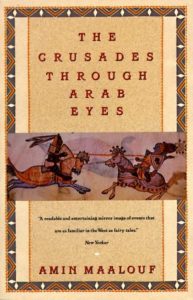
-The Crusades through Arab Eyes-Amin Maalouf

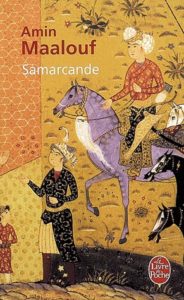
-Samarcande (a novel)-Amin Maalouf (The fascinating fictional story of three friends who were likely actually acquainted: Omar Khayyam, Vizier Nizam al-Mulkh, and Hassan Sabbah, the founder of the Order of Assassins.

Carbonari

Although organized along similar lines as the Freemasons, the Carbonari were members of a secret society whose aims were likely more political than esoteric. Created in the early 1800s to resist Austrian occupation of Italy by means of small cells of resistance fighters, the Carbonari pursued a liberal, nationalist agenda that included hostility to the Catholic Church especially for its support of the Austro-Hungarian Empire. Intimately involved in revolutionary activities in the 1820s and 1830s, the Carbonari were finally crushed by the ever more reactionary European governments that had emerged after the fall of Napoleon. An ex-Carbonaro, Giuseppe Mazzini, would go on to become a prominent leader in the Resorgimento, the political movement that finally led to Italian unification.

Katherine’s “Carbonari” reading list:

-The above books on Secret Societies by Daraul and Heckethorn

-The Last Attachment: The Story of Byron and Therese Guiccioli-Iris Origo

-Shelley and Byron-Isabel C. Clarke